
- Content version
- 1.0
- Last scientific review
- مايو 2026
What should I expect after surgery?
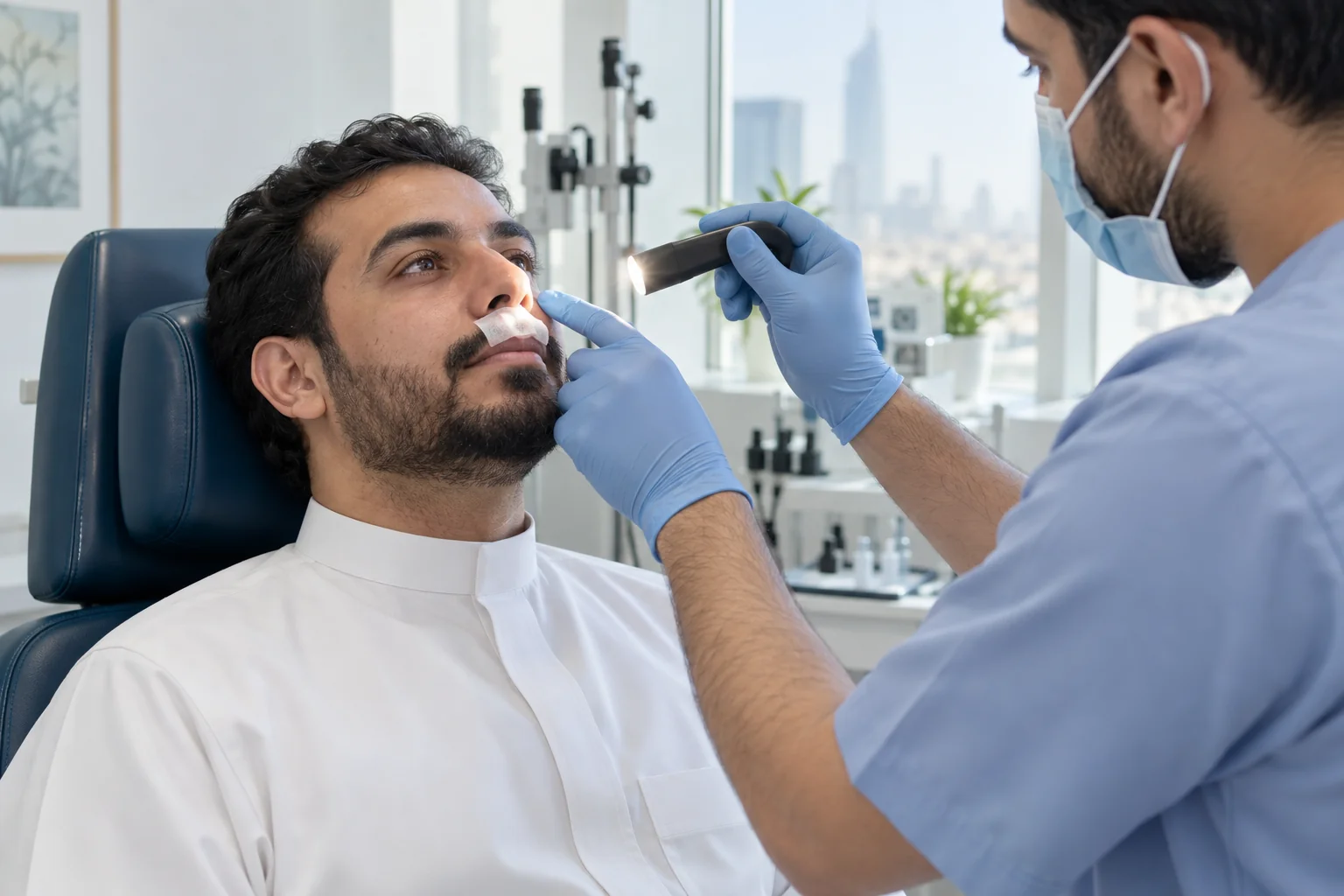
The surgery aims to improve nasal breathing by correcting the septum or reducing the turbinates. Most patients go home the same day or the next day.
The nose will be congested in the first weeks due to swelling, and breathing improves gradually over several weeks.
Normal findings after surgery
- Nasal congestion and mouth breathing, especially in the first week
- Blood-tinged discharge in the first days
- Mild to moderate pain or headache
- Crusting inside the nose
- Dry mouth and throat
- Temporary reduced sense of smell
- Sometimes numbness in the upper front teeth, which gradually improves
Nasal splints or packing: if placed, the doctor usually removes them within days to a week, depending on the type. Don't try to remove them yourself.
Nasal care
- Don't blow your nose forcefully for at least a week, or as directed by your surgeon.
- If you sneeze, open your mouth.
- Use the saline spray or rinse as directed by your surgeon to clean crusts and speed healing.
- Gently wipe discharge from the nostril — don't insert cotton swabs or fingers into the nose.
- Place gauze under the nose as needed, changing it when it becomes wet.
- A moisturizing ointment around the nostril may be used if prescribed.
Sleep
- Elevate your head on two pillows during sleep for about a week to reduce swelling.
- A room humidifier may ease dry mouth.
Medications
- Use only the pain relievers and medications prescribed by your surgeon, at the correct doses.
- Do not use aspirin or anti-inflammatory pain relievers unless approved by your surgeon, as they may increase bleeding.
- Tell your surgeon beforehand if you take blood thinners or herbal supplements.
Activity
- Rest in the first days, with light walking at home.
- Avoid bending, lifting heavy objects, and strenuous exercise for two weeks.
- Avoid contact sports and swimming until your surgeon allows it, usually after 4 to 6 weeks.
- Avoid heavy glasses resting on the nose if bone work was part of the surgery.
Returning to work and school
Most patients return to office work or school after about a week. Physically demanding work may need two weeks or more.
Air travel
Consult your surgeon before flying in the first two weeks.
Follow-up
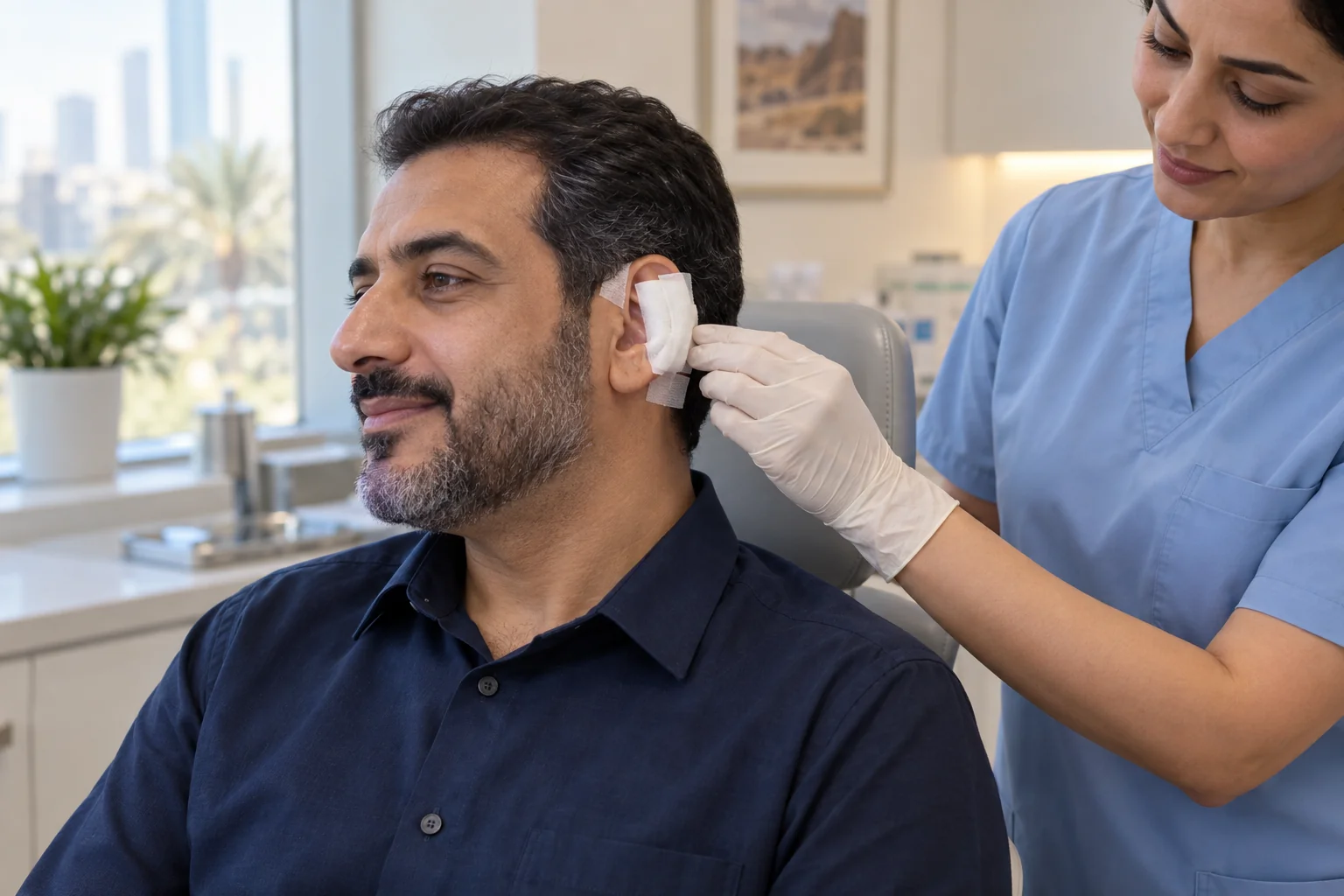
Keep your follow-up appointments — the doctor removes splints and crusts and checks that healing is proceeding well. Full improvement in breathing may take several weeks to months.
Go to the emergency room immediately if:
- Heavy bleeding doesn't stop after 15–20 minutes of sitting and leaning forward
- High fever appears with rash, vomiting, or dizziness, especially with packing in place
- Severe headache appears with neck stiffness
- Clear, watery fluid continuously runs from the nose
- Vision changes or the eye becomes swollen
Contact your doctor if:
- Congestion and pain noticeably increase after the first days
- Fever rises above 38.5°C
- A splint shifts out of place or causes severe pain
- Foul-smelling discharge appears
Remember
- Congestion in the first weeks is normal.
- Don't blow your nose, and open your mouth when sneezing.
- Saline rinses speed healing.
- Heavy bleeding that won't stop is a medical emergency.
This information is for health awareness and education, and does not replace a doctor's consultation or direct medical assessment.
Prepared by: Saudi Society of Otolaryngology–Head & Neck Surgery · Version 1.0 · Last reviewed: May 2026 · saudiorl.com