
- Content version
- 1.0
- Last scientific review
- مايو 2026
What is hearing loss?
Hearing loss is common and becomes more frequent with age. It may be mild and go unnoticed, or severe enough to affect communication, work, and social life.
Treating hearing loss early improves quality of life and may help preserve memory and concentration with age.
What are the signs?
- Difficulty understanding speech in crowded places
- Frequently asking people to repeat themselves
- Turning up the TV or phone volume
- Feeling that others are mumbling
- Difficulty hearing high-pitched sounds, such as women's and children's voices
- Tinnitus (ringing in the ear)
Family members often notice hearing loss before the person themselves does.
What are the types?
Conductive: a problem with sound reaching through the canal, eardrum, or middle-ear bones — such as wax, fluid, or a perforated eardrum. Much of this is treatable.
Sensorineural: a problem in the inner ear or hearing nerve, such as age-related or noise-related hearing loss, and is often permanent.
What are the causes?
- Aging
- Exposure to loud noise
- Earwax
- Ear infections and eardrum perforation
- Stiffening of the middle-ear bones
- Certain medications that affect hearing
- Genetic factors
- Less common causes, such as benign hearing-nerve tumors
How is it diagnosed?
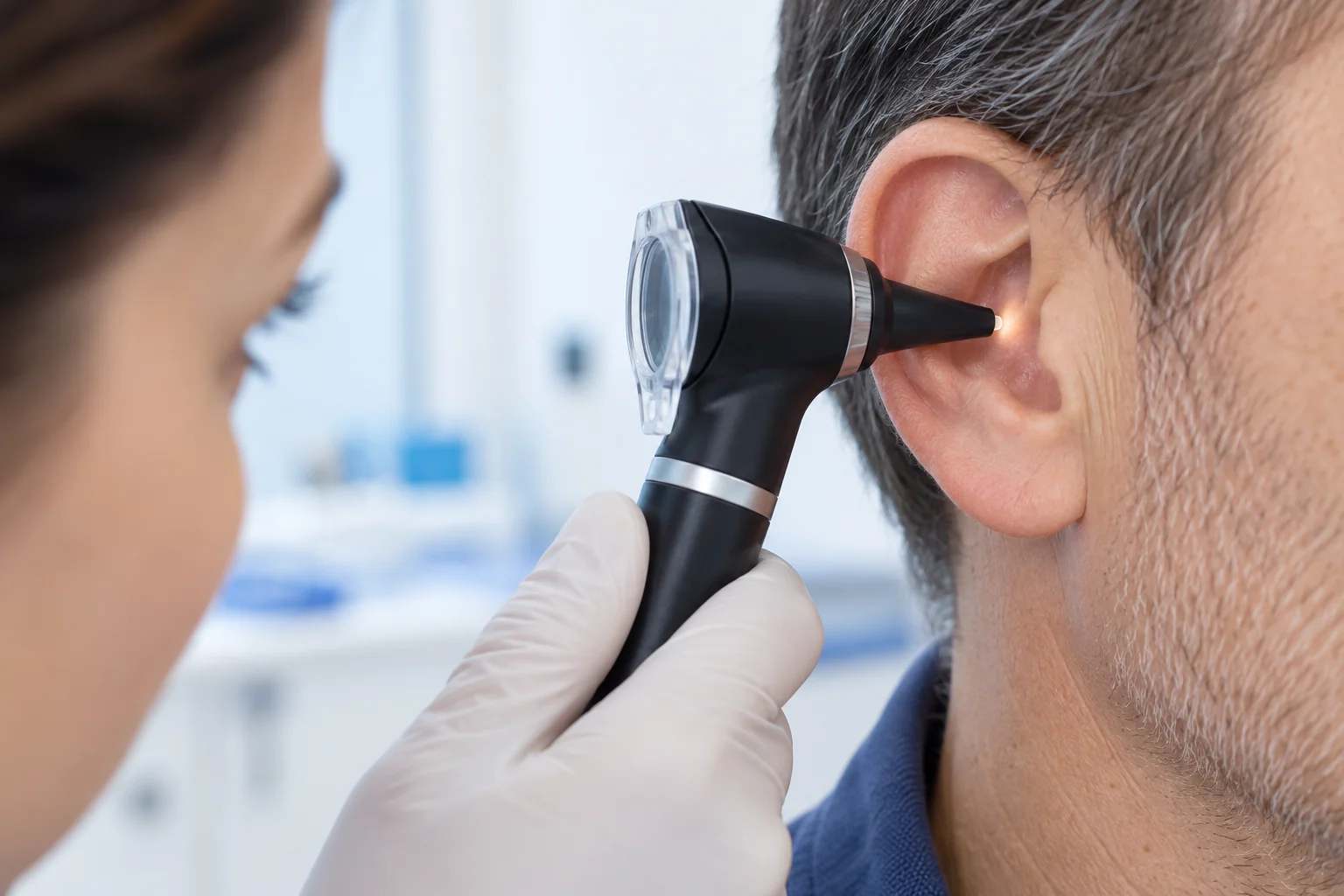
An ENT doctor examines the ear, then performs audiometry, a simple, painless test that determines the type and degree of hearing loss.
The doctor may request an MRI if hearing loss is in one ear or asymmetric.
What are the treatment options?
Treatment depends on the type and cause of hearing loss.
Treating the cause
Such as removing wax, treating infection, or surgically repairing a perforated eardrum.
Hearing aids
The primary treatment for most permanent hearing loss. Modern hearing aids are small and can be precisely adjusted based on the audiometry results. The brain needs a few weeks to adjust, so keep using them consistently.
Cochlear implants
For patients with severe hearing loss that hearing aids can't adequately help.
Bone-conduction hearing devices and middle-ear surgery
For some cases of conductive hearing loss.
Tips for communication
- Face the person you're speaking with, and reduce background noise.
- Ask others to speak clearly, without shouting.
- Let people around you know about your hearing loss.
- Use captions on TV and phone when available.
How do I protect my hearing?
- Use ear protection in noisy environments.
- Lower the volume on earphones.
- Don't insert cotton swabs into the ear.
When should I see a doctor?
- If you or your family notice reduced hearing.
- If hearing loss is worse in one ear than the other.
- If accompanied by tinnitus in one ear.
- If you have ear pain or discharge.
- If you're exposed to loud noise at work, have your hearing checked regularly.
Sudden hearing loss is an urgent condition
If you suddenly lose hearing, especially in one ear, see a doctor the same day or within two to three days at most. Early treatment increases the chance of recovery.
Go to the emergency room immediately if it's accompanied by facial or limb weakness, difficulty speaking, or severe dizziness.
Remember
- Hearing loss is common and can be treated or improved.
- Audiometry is the first step.
- Hearing aids improve communication and quality of life.
- Sudden hearing loss needs same-day evaluation.
This information is for health awareness and education, and does not replace a doctor's consultation or direct medical assessment.
Prepared by: Saudi Society of Otolaryngology–Head & Neck Surgery · Version 1.0 · Last reviewed: May 2026 · saudiorl.com